
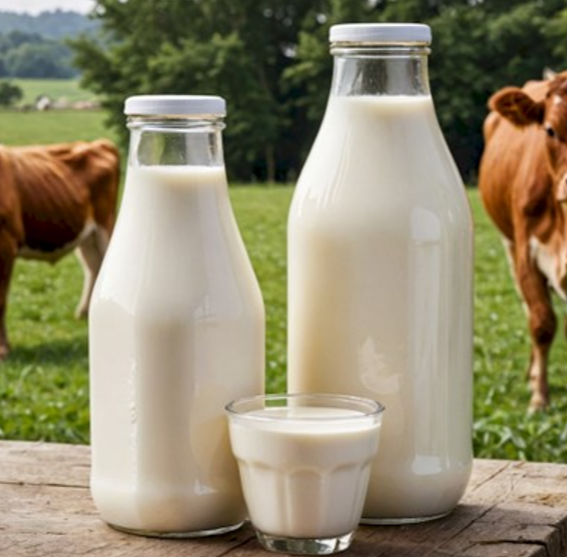
Kenya’s dairy sector is among the most developed in Sub-Saharan Africa and has grown to become the continent’s largest milk producer, overtaking Egypt. According to the State Department for Livestock Development, national milk production increased from 4.6 billion litres to a record of 5.4 billion litres. This growth has been supported by an expanding dairy herd, improved breeding technologies, including artificial insemination and sexed semen, and the expansion of dairy farming systems.
The sector contributes approximately 14% of Kenya’s agricultural GDP and between 3.5% and 4% of national GDP. It supports an estimated 1.8 million households and more than 700,000 jobs across milk production, collection, transportation, processing and marketing. Formal milk intake has also continued to grow, reaching 908.4 million litres in 2024 and increasing by a further 19% year-on-year in the first half of 2025, reflecting improvements in dairy infrastructure and growing market demand.
This expanding production base positions Kenya to serve both regional and international markets. Accessing these markets, however, requires exporters to navigate a structured regulatory process designed to safeguard product quality, food safety and compliance with the sanitary requirements of importing countries. Understanding the relevant institutions, procedures, and documentation is therefore essential for dairy businesses seeking to export their products.
Understanding the Regulatory Framework
Dairy exports from Kenya are governed primarily by the Dairy Industry Act (Cap. 336) and the Dairy Industry (Imports and Exports) Regulations, 2021, alongside applicable Kenya Bureau of Standards (KEBS) requirements and sanitary and phytosanitary regulations.
Under this framework, businesses intending to export dairy products must be registered as dairy business operators and hold appropriate regulatory approvals. Exporters are also required to obtain a valid export permit from the Kenya Dairy Board (KDB) and ensure that their consignments leave the country through designated ports of exit.
These requirements help ensure that Kenyan dairy products entering international markets meet established standards for quality, hygiene, food safety and traceability.
A Streamlined Electronic Export Process
The dairy export process is facilitated electronically through the KenTrade National Electronic Single Window System (TradeNet), which brings together key regulatory agencies involved in export clearance, including the Kenya Dairy Board, Directorate of Veterinary Services (DVS), Kenya Revenue Authority (KRA) and Kenya Bureau of Standards (KEBS).
The process begins with registration on the KenTrade Trade Facilitation Platform and familiarization with the TradeNet system. At the same time, prospective exporters must register with the Kenya Dairy Board as dairy business operators. This process includes an inspection of the processing premises to assess compliance with milk quality, hygiene, and food safety requirements. Successful applicants are subsequently issued with an Annual Dairy Regulatory Permit.
Once the necessary registrations and approvals are in place, the exporter can apply for a consignment-specific export permit through TradeNet. The application generates a Unique Consignment Reference and requires the submission of supporting documents, including the Export Declaration Document, Certificate of Origin where applicable, and relevant KDB compliance records.
The Directorate of Veterinary Services then undertakes a sanitary risk assessment and provides the required veterinary clearance through the TradeNet system. Applicable export fees are paid electronically, after which the Kenya Dairy Board reviews the complete application and issues the final export permit. Customs clearance is subsequently undertaken through the Kenya Revenue Authority, allowing the approved consignment to proceed for shipment.
The integration of these processes through TradeNet provides exporters with a more coordinated pathway for obtaining the approvals required from different government agencies.
Beyond Compliance: Building Competitive Kenyan Dairy Brands
Successfully exporting dairy products involves more than meeting regulatory requirements. Kenyan businesses must also position their products competitively in international markets, where buyers increasingly consider factors such as quality, origin, packaging, consistency, traceability and brand identity.
KEPROBA encourages eligible dairy exporters to strengthen the visibility and identity of their products through the Made in Kenya (MIK) Mark. The mark provides a recognisable identity for Kenyan products and can help exporters communicate their Kenyan origin to international buyers.
Qualifying companies, based on requirements such as local operations, Kenyan employment levels and statutory compliance, can also benefit from export promotion initiatives, including participation in trade fairs and exhibitions, promotional support and product promotion through Kenyan missions abroad. These opportunities can complement regulatory compliance by helping exporters build market visibility, establish buyer relationships, and explore new export destinations.
Key Export Documentation
Before shipping dairy products to international markets, exporters should ensure that all required documentation is in place. Key documents include the Kenya Dairy Board Export Permit, Veterinary Clearance Certificate, Export Declaration Document, Certificate of Origin where applicable, Commercial Invoice, Packing List, and Bill of Lading or Airway Bill.
Depending on the product and destination market, exporters may also be required to provide additional quality, health, or sanitary certificates. It is therefore important to establish the specific import requirements of the destination country before preparing a consignment.
From Compliance to Market Access
Kenya’s growing dairy production presents significant opportunities for exporters to explore new regional and international markets. However, converting increased production into sustainable exports requires businesses to combine regulatory compliance with product quality, reliable supply, effective branding, and a clear understanding of destination-market requirements.
By registering with the relevant authorities, using the TradeNet platform, securing the necessary veterinary and export approvals, and preparing the required documentation, Kenyan dairy businesses can navigate the export process more effectively.
For exporters, compliance should therefore be viewed not simply as a regulatory obligation, but as an important foundation for building buyer confidence, accessing new markets and strengthening the competitiveness of Kenyan dairy products globally.